|
by Jim Paw-Paw Wilson Illustrated by Jock Dempsey |
|
| |
|---|---|
|
22 JUNE 1775 Since there was still good light, I lowered the tailgate of the wagon, and pulled the forge out. Taking the stump and anvil from where they were stowed, I set them up. After I got the slack tub down from the wagon, I got the bucket and went looking for water. Corporal Baker arrived just then and I asked him to walk with me. He asked why I had the bucket, and when I told him that I was going to fill my slack tub, he suggested that I wait for a minute and ran back to his wagon. When he returned, he had two buckets. 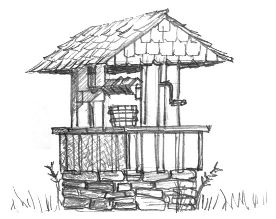
As we walked to the well, I explained why our names were on the guard roster and why I felt we should do our fair share of the work. He commented that he had already noticed that I did not shirk any of the work and had determined to pattern his own behavior on mine. He said that while he had not thought his way through the idea, he agreed that sharing in the work and hardships would help to make a better situation for all of us. That in turn would make our own work easier. While we were talking, we arrived at the well. I lowered the windlass bucket, filled two of the buckets and was ready to fill the third. He took the two full ones, walked back and dumped them into the slack tub. As he returned, I had finished filling the third bucket, and was on my way to the tub. When we passed each other, he asked how many buckets would be needed to fill the tub. I told him that two more should do it. Pouring my bucket into the slack tub, I took the bellows handle from its storage place and hooked put it in place. Then I got a small scoop of coals from the fire, placed them in the forge and covered them with fresh charcoal. Feeding the fire with a little blast from the bellows, I soon had a fire. Placing one of the old horse shoes I had gotten from the fence into the fire, I brought it to a good working heat. Using my tongs, I took it to the anvil and straightened it out. Then I dropped it on the ground under the forge to cool, I got another one and placed it in the fire. I was reaching for the bellows handle when Corporal Baker returned with two more buckets of water. I suggested that he just put one into the slack tub, and set the second near the fire. Since I was only going to be making small things, I didn't really need a full tub. I went ahead and straightened out a second shoe while he took the bucket of water over to the fire. When he returned, he began pumping the bellows for me, and we soon had the rest of the shoes straightened out. Using the bars of iron that I had made by straightening out shoes, I made two hoof picks from each bar of iron. Robert came back just as I was starting the first hoof pick. He picked up one of the bars of iron from under the tailgate, not realizing that it was still pretty hot. He soon turned loose of it! I laughed and asked him if it was hot, and he replied that no, it just didn't take him long to look at a piece of iron. We all had a good laugh at that! As I finished each hoof pick, I quenched it in the barrel and laid it on the tailgate. As the teamsters were finishing up with their teams, they gathered around to watch. I asked how many of them did not have picks, and counted three that did not. That was easy enough to do, so I made three. Then I made a couple of extra, in case one got lost or broken. 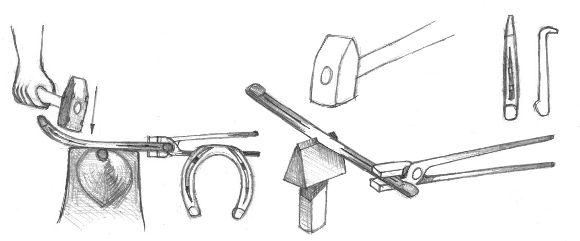 Near supper time, Baker and the other teamster from Company A went to their company area to draw our rations for the day. Bringing them back, they started to issue them, when one of the teamsters from Company D spoke up. He said that he had been a cook's helper at the tavern in his town. He volunteered to do the cooking for all of us, if we would do the cleaning up. I was more than willing to do that, for while I am a good eater, my cooking leaves MUCH to be desired! His suggestion was eagerly adopted and all of the rations were given to him. He wondered if we could make some type of portable table for him to use as a work table. Robert got his saw horses out of the wagon, and carried them over close to the fire. One of the other teamsters said that he had seen a couple of old boards out behind the barn and that he would go get them. I cautioned him to check with the hostler or the tavern owner to see if we could buy them. When he came back with them he said that the hostler had told him we were welcome to use them but to please return them, since he needed them to make a new stall in the barn. I charged the teamster to be sure that they were returned in the morning, and he said that he would see to it. So our cook has a work table for tonight at least. And all of us will keep our eyes open for some boards that we can keep for the purpose. Supper was a convivial affair, helped along I expect by the bucket of ale that we bought from the tavern. I had one tankard, and then switched to tea, and noticed that most of the teamsters followed suit. A couple of the men had a second tankard, but no one had more than two. After supper, I went to talk to the tavern keeper. I wanted to see if he had any honey for sale, and fortunately he did. Not much, only a couple of pounds, and it was fearfully dear, 6 pence the half pound! But I sorely missed the honey in my tea. I also bought half a pound more of tea. That was even more expensive! Soon I may have to take to drinking coffee. For the colonies have all agreed to a ban on importation from England. By the time I got back, it was near dark. We sat around the fire just talking, then shortly, I made up my bed. After making sure that the guards were on their rounds, I went to bed early for I was going to have to get up two hours early for my tour of guard duty. The noise from the tavern kept me awake for a bit, and I was starting to get irritated, but fortunately some of the officers came by and sent the troops to their tents. 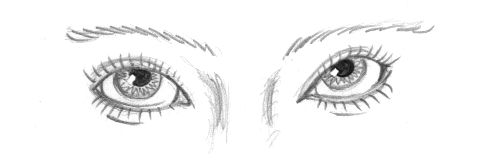 I went to sleep seeing Dorothea's eyes in my mind. It is amazing to me how time can both fly and crawl. We have been encamped outside of Boston for almost a week now. Yet it seems like no more than a day. At the same time it seems as if I have been away from Dorothea for months. The evening that we spent near the tavern, the colonel rode on into Boston. He learned where we were to be camped at General Ward's headquarters. When we first came into the encampment, there was some little laughter from the troops already there. A few comments were made about our size, since we are not a full regiment but instead are what is known as a half-regiment or sometimes a demi-regiment. Our regimental staff is small, and we only have five companies of infantry, whereas a full regiment would have ten. But a few "discussions" between some of our troops and the commentators soon established our ability, and we hear no more about being "the little boys." I fear that one of those "discussions" involved most of the teamsters, for several un-acceptable comments were made as we were setting up our area in the camp. I understand that the one commentator will be returning to duty any day now. I am glad to hear that, for I really did not mean to strike him that hard. We are camped not far from the positions that the British forced our men from on the 17th of June. Some of our men have been able to do some scavenging in that area. They brought back several muskets, and much other equipment as well. I was able to repair all of the muskets except one, so all of our teamsters are now armed. The one that I did not repair had a small split in the barrel. It was only split for about an inch, and I probably could have welded it. But if that place in the weld was bad, no telling what else might be wrong with it. Rather than take a chance on it, I took it apart and salvaged all of the parts except the barrel. Most of that I heated, and pounded flat for stock. When I started to flatten it out, two more places split on the barrel! Inexcusably poor workmanship! But at least it was a British musket. I also saved part of the barrel for tubing, thinking about the locks I want to make for Robert's and my tool boxes. There were five muskets more than we needed . They are kept in the wagon with the powder and shot. I have been kept quite busy, repairing all of the equipment that has been found. I must admit to being a little jealous of some of the other regiments. Each full sized regiment has a master blacksmith as a member of their artificer company. I have had the opportunity to talk to several of them. They all either know Master John, or know of him. He is very well respected. A couple questioned whether a "mere" journeyman, can do all of the necessary work, but when they heard that I had been apprenticed to Master John they were more cordial. All that have seen our wagon have been impressed by it. Master John and Master Carpenter did an excellent job in the planning, and the four of us did very good work when we made the changes. A couple of those who questioned my ability have seen some of my work, and I am now accepted by all of them. I think the fact that the teamsters elected me sergeant may have helped with that, for it shows that the men I work with respect me. I must always strive to keep that respect, for while it is not easily granted, it can easily be lost. Our daily routine has not changed much. We rise in the morning, perform our daily ablutions, eat our meals, go to the formations that are called and do a lot of sitting. The infantry troops do a good bit of drilling, and are becoming quite proficient. I asked Lieutenant Colonel Alsop to give me some instruction in drill, thinking that there may be times when the teamsters will be required to parade with the other troops. He agreed that would be wise, and asked the first sergeant from Company A to teach us. The first sergeant spent a couple of evenings teaching us the basics, and then had me work with one of his platoons for a while. So now we attend formations with the rest of the regiment. The other big change is that we now have uniforms! Since we are not a Continental regiment, but are a Colonial regiment, our uniforms are not blue. Instead they are a dark forest green, with black trim. And very smart looking, if I do say myself. I wonder what Dorothea will have to say. I must also add that I rather like the appearance of the sergeant's sash that I now wear! I have written to Dorothea. One of the men was being sent home. He was slightly wounded on our second day here. The surgeon said it would heal, but that he would be better at home, rather than risking camp fever by staying. So I wrote Dorothea a quick letter and he carried it to her for me. It wasn't long, just a couple of pages. I did not tell her that I had been elected Sergeant and I asked the man carrying the letter for me to not say anything. I would like to surprise her if I can. Continued in chapter 9 | |
